

There is a familiar sequence. A true crime series lands on Netflix, everyone watches it in the same fortnight, and for the next month people keep asking each other what to watch next. The usual answer is to scroll Netflix again and hope.
Which is a shame, because a great deal of the best true crime and documentary made in Britain sits on services that cost nothing, and hardly anybody thinks to look there.

Start with the free ones
This is the part that gets missed, so it goes first.
ITVX
ITVX runs curated true crime collections rather than leaving titles scattered through a general catalogue. Series such as Killer Kids, Body in the Water and Secrets of a Murder Detective sit together in one place, which makes browsing far less of a chore than searching a big platform.
Free, with advertising. For anyone who has finished the Netflix documentary everyone was talking about, this is the most productive next stop and it costs nothing.
BBC iPlayer
The BBC’s documentary output is the strongest in Britain, and its true crime tends towards a particular style: long-term access to police investigations, filmed as they happen. Murder 24/7 on BBC Two is the obvious example of the form.
Free of subscription, though iPlayer requires a TV licence, as our guide to whether you need a TV licence to stream explains.
Channel 4
A documentaries section covering both British and American work, with the social documentary tradition Channel 4 has always been known for sitting alongside the crime material.
Then the paid services
Netflix is where the genre’s biggest moments happen, and where the conversation usually starts. Its documentaries get the promotion, the budget and the audience, which is why a Netflix true crime release becomes a national talking point in a way an ITVX one rarely does.
Crime+Investigation is a dedicated channel in the space, for anyone whose appetite runs beyond what the general services carry.
Prime Video and Sky’s documentary channels both carry substantial catalogues, Sky’s particularly on the feature-length end.

British and American true crime are different things
Worth knowing before you pick, because people who love one frequently bounce off the other.
American true crime tends towards the serialised case study. One story told across six or eight hours, often with a campaigning edge, revisiting a conviction or building an argument. It is designed to be discussed and to leave you unsettled about the outcome.
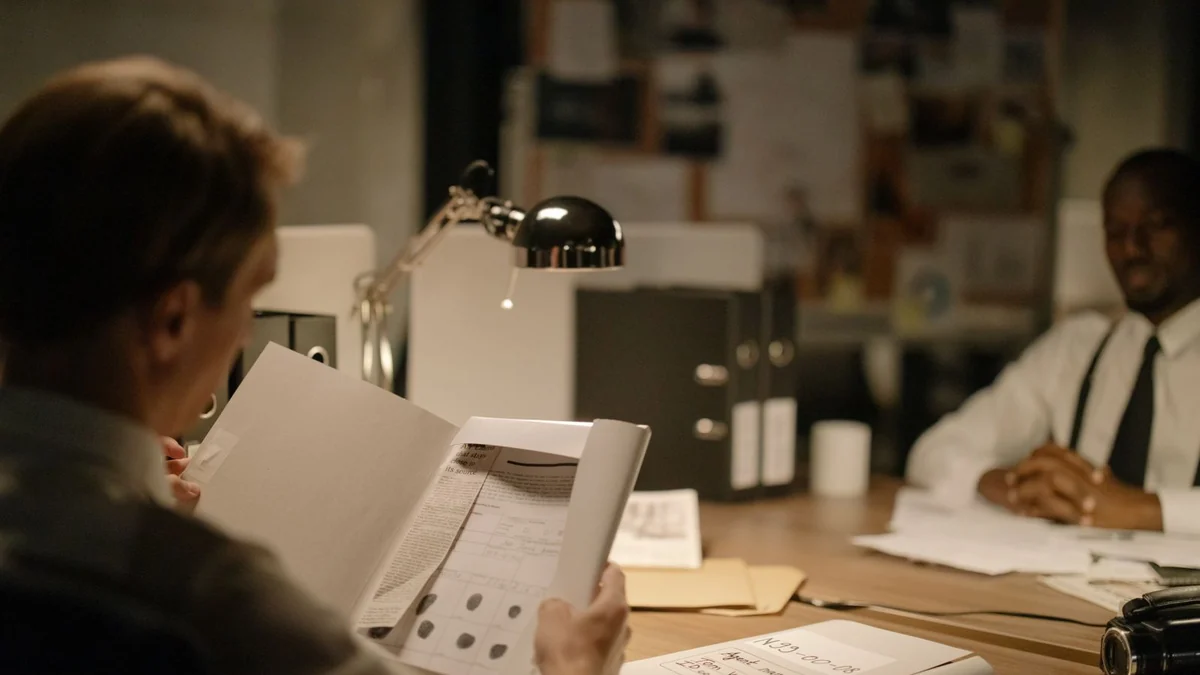
British true crime leans towards procedural access. Cameras embedded with a police force, following investigations as they unfold, usually shorter and less interested in advocacy than in showing how the work is done.
Neither is better. But someone who came for the American style and lands on a British procedural may find it flat, and the other way round. Knowing which you are picking up saves an evening.
Beyond crime
The documentary category is much wider than the true crime shelf, and the free services carry a lot of it.
- Natural history is a British speciality, and iPlayer is where it lives.
- Social documentary sits largely on Channel 4, which built its reputation on it.
- Feature documentary, the cinema-released kind, tends towards Sky’s channels, Netflix and the free film services covered in our guide to free films on UK streaming. Kanopy, free with a library card, is particularly strong here.
- Archive and historical material turns up across iPlayer and UKTV Play, which is one of the more overlooked services in Britain.
A note on the subject matter
These are real cases involving real people, many of whom are still alive.
The better programmes work with families rather than around them, name victims as people rather than plot points, and are careful about ongoing legal proceedings. The weaker ones treat a death as an entertainment format. The difference is usually obvious within the first ten minutes, and it is worth paying attention to.
Beyond that, what anyone chooses to watch is their own business.
Finding a specific documentary
Documentaries move between services more than most content, partly because they are cheaper to license and their rights are frequently short. Something on Netflix last year may be on Prime this year.
So rather than assuming, search across every British service at once. Our UK streaming availability guide covers how, and our guide to why titles move between services explains why they wander in the first place.
How to work through the genre
- Exhaust the free services before subscribing to anything. ITVX, iPlayer and Channel 4 hold more than most people expect.
- Use ITVX’s collections rather than searching. The curation genuinely helps in a genre with this much volume.
- Decide which tradition you want. Serialised American case study, or British procedural. They are different evenings.
- Rotate a paid service when something big lands. A month of Netflix when a major documentary arrives costs far less than holding everything permanently.
Common questions
Where can I watch true crime free in the UK?
ITVX runs dedicated collections, Channel 4 carries British and American documentary, and BBC iPlayer has a strong catalogue for anyone with a TV licence.
Which service has the most true crime?
Netflix gets the attention and the biggest releases. ITVX carries more of it free, organised into collections.
What is the difference between British and American true crime?
American series tend to be serialised case studies, often campaigning. British ones tend to be procedural, filmed with police access, and shorter.
Do I need a TV licence for iPlayer documentaries?
Yes. Any use of iPlayer requires one, including on-demand viewing.
Why did a documentary disappear from a service?
Documentary licences are frequently short, so titles move between platforms more than drama does.
The short version
Check ITVX, iPlayer and Channel 4 before you pay for anything. Work out whether you want the American serialised case or the British procedural. And rotate a subscription when something big lands, rather than holding it all year for the two or three that matter.